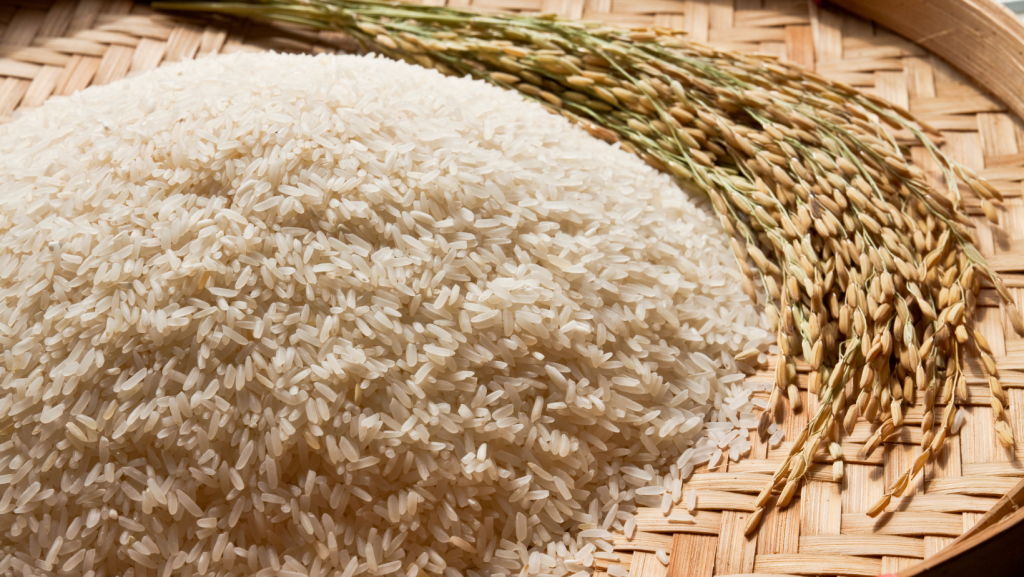
Rice is a plant that has nourished our lives since ancient times. Thailand has many varieties of rice. Each species has a distinctive identity and high nutritional value. Thailand used to be one of the top recognized rice exporters in the world, but now the world rice market is more competitive. Both the premium rice market and Khao San Chao rice. Due to there are products from many countries such as Vietnam, India, Cambodia and Latin American. So far, in terms of price, Thai rice can’t sell itself at a lower price than competitors. However, consumer trends around the world have been awakened in terms of health as the first priority. NIMT must realize that “we can’t only grow rice just to fill our stomachs, but we must help people to get more benefit and safety through the values of the farmer’s wisdom”. Because of the innovation and cooperation of the Thai people in all sectors, that is the initiative idea that is the origin of the project to strengthen the NQI of the quality of Thai rice with metrology for trade competition. This project has been led by Dr.Cheerapa Boonyakong, Group leader of the Organic Analysis, Department of Chemical Metrology and Biometry, National Institute of Metrology (NIMT).
The origin of the project
Presently, the global rice market is more competitive. Both the premium rice market and Khao San Chao rice. Due to there are products from many countries such as Vietnam, India, Cambodia and Latin American. Therefore, the quality of rice is to be inspected according to the requirements and comply with international guidelines. For example, in the European Union, levels of GMO contamination are not stipulate exceed more than 0.9% by weight. Codex stipulates that total aflatoxin contamination in food and agricultural products is not over more than 15 ppb. CODEX STAN 193-1995 requires arsenic is not over more than 0.2 ppm, cadmium is not over more than 0.4 ppm. It is according to TAS 9002-2016, the amount of pesticide residues from pesticides in agricultural products, including paddy and rice. In 2008, aflatoxin was detected in 20 tons brokens that shipped to the processed food producers in Japan. It was totally affected to more over 3,000 tons of rice were immediately suspended to export. It has a terrible negative effect on the image and credibility of Thai products.
Therefore, it is important to have measurements that are accurate and traceable in metrology that internationally recognized. In particular, the measuring parameters related to the quality of rice, the determination of the amount of amylose in rice to determine the softness or hardness of rice when it cooked, and the nutritional value of rice, such as the amount of fiber, antioxidants in color rice, measurement of mycotoxin contamination, measurement of heavy metals in rice (Arsenic, Cadmium, Lead and Mercury), measurement of genetically modified organisms (GMOs) and the measurement of pesticide residues.
In what fields does NIMT take part?
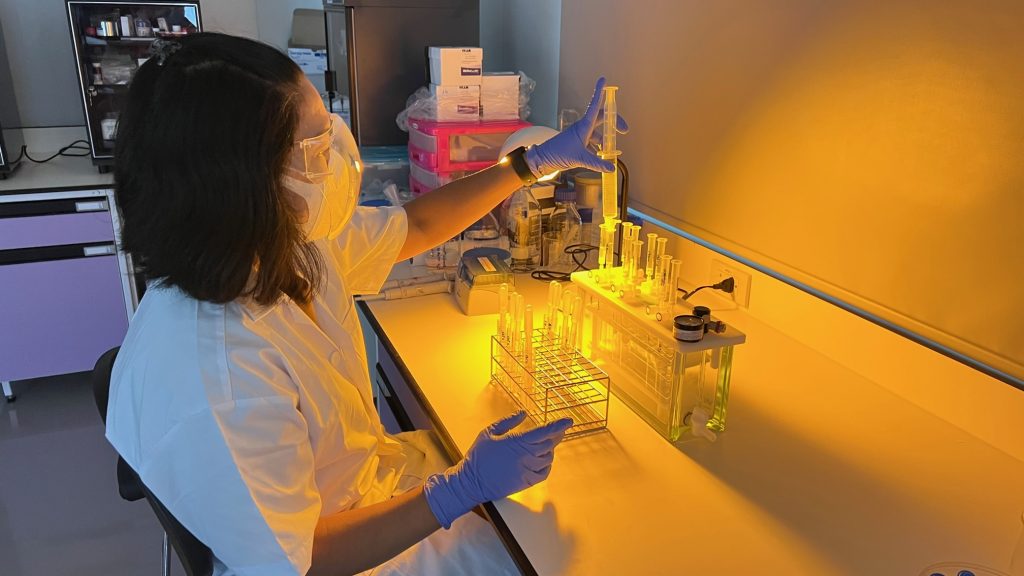
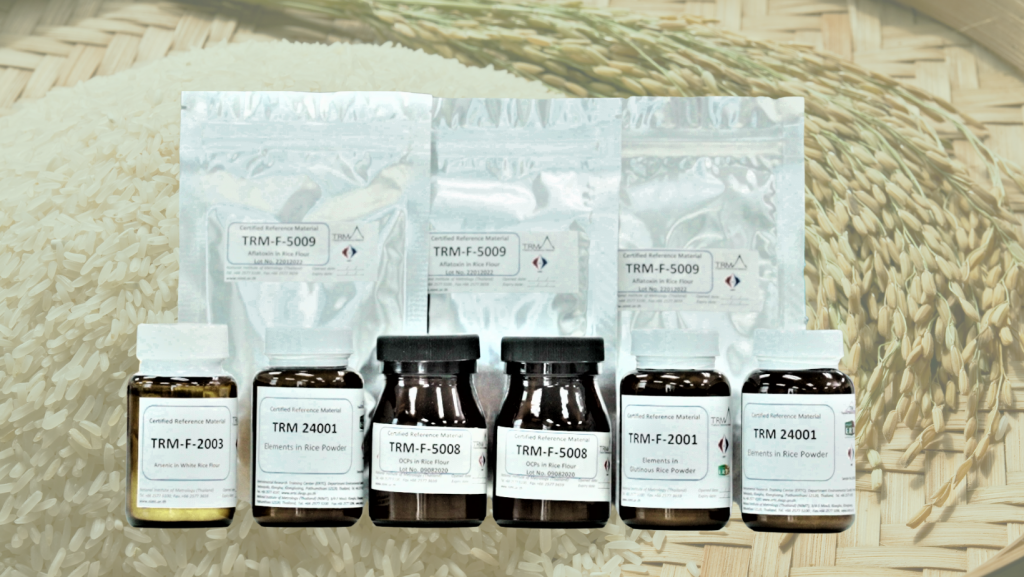
Roles and duties of NIMT is to maintain measurement standards and transfer them to users, that is a testing and calibration laboratory. NIMT has developed a standard of measurement methods, produced reference materials related to rice safety, and reference material for rice moisture measurement for sale to testing laboratories and manufacturers including to organizing a program to compare the results of measurement or proficiency testing in Thailand. It is to develop the potential of testing laboratories by integrating all relevant departments to be able to effectively implement the plans in accordance with the national strategies. It is the national quality infrastructure will be guaranteed the quality of Thai rice which has differentiated from other rice under the concept of value-added to Thai rice that focuses on downstream industries (packed rice)
From the distinctive identity of Thai rice that has been added value by entering quality system processes. We will guarantee the quality of rice, reduce trade barriers, add more value and build confidence to consumers, and get competitive advantage in the global market.
NIMT is committed to pushing the national quality infrastructure of Thai rice to become concrete, be strong and sustainable. It has been well coordinated work with various departments under the national quality infrastructure following by the mission of NIMT. That is the development of measurement methods in terms of rice, production of certified reference material for rice analysis, including organizing a proficiency testing program to encourage domestic testing laboratories to use reference materials. That is not enough that NIMT must push those laboratories must participate in proficiency testing programs and to be certified ISO/IEC17025 in order to reach the standards that are accepted both domestic and international. It can build competitiveness and raise standards to Thai rice.
The activities of the project
1. Organize proficiency testing activities, and mineral and metal content analysis in Thai rice.
2. Develop a primary measurement method for the analysis of Se and Cd content in rice and rice products.
3. Develop a primary measurement method for the analysis of selenium in rice products using the Gravimetric Standard Addition ICP-MS technique.
4. Proficiency testing program for measuring organic chemistry in rice.
5. Reference material for the measurement of mycotoxins in rice and rice products.
6. Develop a method for measuring antioxidants in rice and rice products.
7. Develop a method for detecting rice species.
8. Develop a plasmid DNA reference material for testing and measure the amount of genetically modified rice (Reference material Bt63 plasmid DNA type)
NIMT has publicized these activities by building a national reference database with comparing the results of measurements activities between laboratories and the production of national reference materials via the NIMT website at https://www.nimt.or.th/pt/
For source of reference material (Reference Material : RM), please visit https://www.nimt.or.th/etrm/index.php
That is the importance of metrology that drives the Thailand’s quality system into the entire production value chain that able to increase the advantages of quality and standard of Thai rice.
—
Information update: Natthaphon Jarat and Thanakporn Nontachart, International Relations Officer, and Ms.Tusita Songkit, International Relations CO-OP working student.
Facebook: https://www.facebook.com/NIMT2541/
YouTube: https://www.youtube.com/user/nimt2541